 Australian owned & operated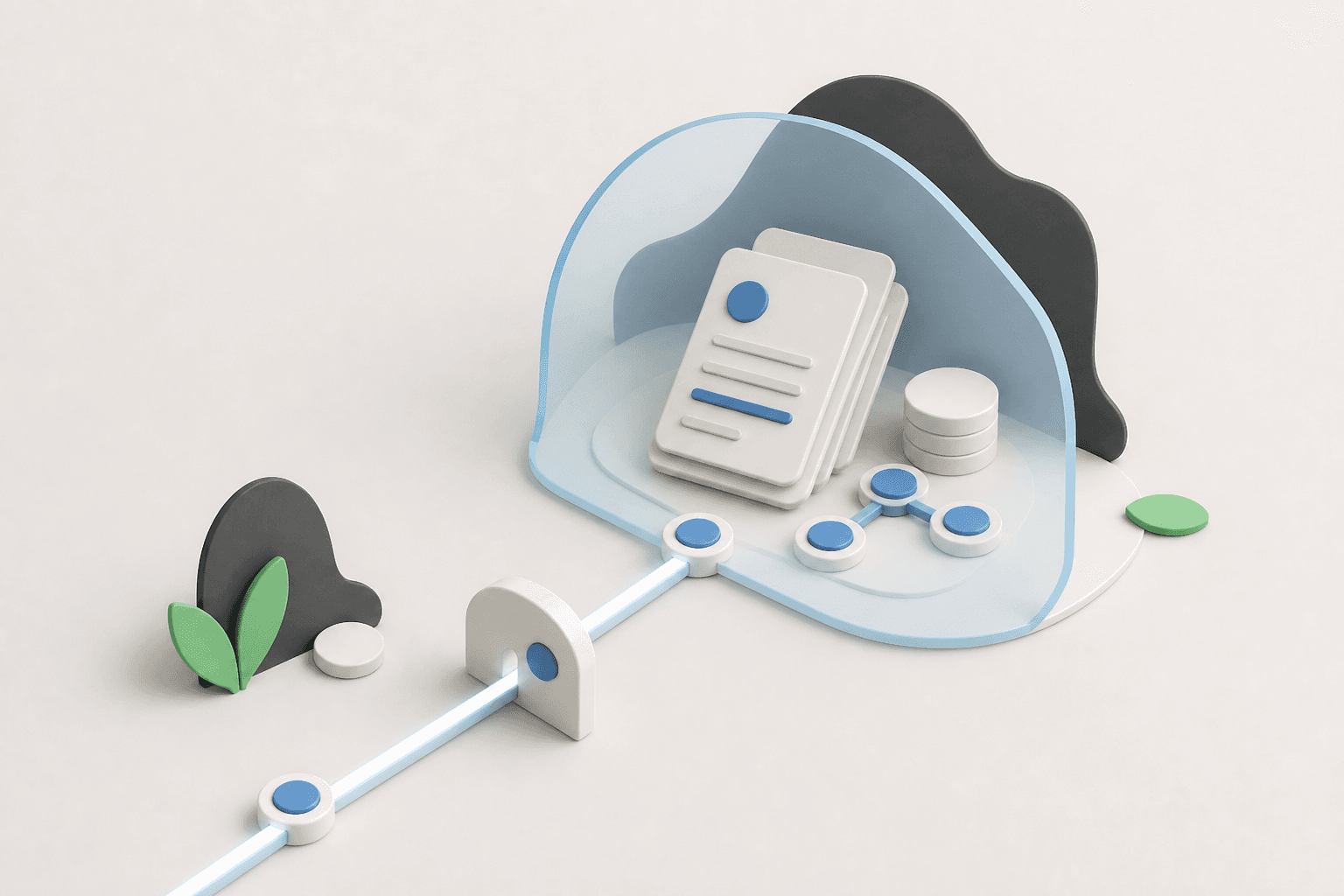
Is your business data safe with an AI agent? A plain-English security guide
July 28, 2026 · 6 min read
Behind every "we're not ready for AI yet" is usually a quieter, more sensible worry: what happens to our data? Customer details, financials, medical bookings – this is the stuff a business cannot afford to be casual about. Good. Hold onto that instinct; it will serve you well in the questions below.
Where the data actually goes
Start by demystifying what an agent does. An agent connects to the tools you already use – your inbox, your accounting software, your booking system – through the same official connections (APIs) those tools offer to any approved software. It reads what it needs for the task, does the work, writes the result back into your systems, and keeps a log of what it did.
The important design principle is that your data should stay in your systems wherever possible. A well-built invoice agent doesn't hoover your accounts into someone else's database; it reads a bill, creates a draft in your Xero, and moves on. What the agent sees should be the minimum the task needs – the security trade calls this least privilege, and it's the single most useful phrase to bring into any vendor conversation.
Five questions to ask any provider (including us)
You don't need to be technical to run a good security conversation. Ask these, and expect straight answers:
- "Is our data used to train AI models?" The answer you want is no – not without your explicit say-so. Our position is on the record on our data security page: customer data is not used to train foundation models without the customer's instruction or consent.
- "What exactly can the agent access?" The answer should be a short, specific list – this inbox, this accounting file, read-only until go-live – not "everything, to be safe". Scopes should be revocable by you at any time.
- "Is data encrypted?" In transit and at rest should both get a yes. Anything else is below the waterline of modern practice.
- "Who on your team can see our data, and when?" Look for role-based access, multi-factor authentication and least privilege by default – not "the whole team has the login".
- "What happens if something goes wrong – and when we leave?" A serious provider has an incident process (in Australia, the Notifiable Data Breaches scheme sets the legal floor) and will tell you plainly how access and data are removed when you stop being a customer.
Red flags that should end the conversation
- Vague answers to the training question, or a privacy policy that reserves broad rights to "improve services" with your data.
- A request for blanket admin access to systems the task doesn't touch.
- No willingness to start read-only or in approval mode while you build trust.
- No written security page at all. If it isn't written down, it isn't a commitment.
Sensible rules inside your own business
Security is shared work, and the customer side of the ledger is short but real: keep your account credentials protected, grant integrations the narrowest access that does the job, and tell your provider promptly if something looks off. If you handle sensitive categories of data – clinics come to mind – say so early, so the agent is scoped around it from day one. That's how we approach clinic work: agents handle the admin around your practice software and touch only the data each task needs.
The bottom line
"Is it safe?" has the same answer as most business questions: it depends on who you're dealing with and what you agreed. The mechanics – encryption, least privilege, no training on your data, breach notification – are well-established; the variable is whether a provider commits to them in writing and can explain them without fog.
Ours are written down on the data security page, and we're happy to walk through them in person on a free discovery call. Bring your most suspicious question; it makes for a better meeting.
Related: What is an AI agent? A plain-English guide and Your first AI agent: choosing what to hand over